Getting engaged is one of life’s most exciting milestones. However, after the celebration begins, many couples quickly realize there are countless tasks to manage before their wedding day. From announcing the engagement and planning the engagement party to booking vendors and organizing the honeymoon, having a structured timeline can make the entire journey less stressful and more enjoyable.
This engagement party to honeymoon calendar provides a complete wedding planning timeline that helps engaged couples stay organized, meet important deadlines, and create a memorable wedding experience from start to finish.
Why Every Couple Needs a Wedding Planning Timeline
A wedding involves hundreds of decisions, multiple vendors, financial commitments, and guest coordination. Without a clear schedule, important tasks can easily be overlooked.
Benefits of following a wedding timeline include:
- Reduced planning stress
- Better budget management
- More vendor availability
- Improved guest experience
- Fewer last-minute emergencies
- More time to enjoy your engagement
A structured calendar allows couples to focus on celebrating their relationship instead of constantly worrying about deadlines.
Immediately After the Engagement (0–1 Month)
The first few weeks after getting engaged are all about celebrating and laying the foundation for wedding planning.
Announce Your Engagement
Before posting on social media, share the news with:
- Immediate family members
- Close friends
- Wedding party candidates
This personal touch ensures loved ones hear the news directly from you.
Discuss Your Wedding Vision
Start talking about:
- Wedding style
- Preferred season
- Destination or local venue
- Guest count
- Budget expectations
Aligning expectations early prevents misunderstandings later.
Create a Preliminary Budget
Establish spending priorities such as:
- Venue
- Catering
- Photography
- Entertainment
- Honeymoon
Knowing your budget helps guide all future decisions.
12–18 Months Before the Wedding
This period is crucial for securing major vendors and selecting your wedding date.
Choose a Wedding Date
Consider:
- Seasonal weather
- Venue availability
- Family schedules
- Travel requirements
Popular wedding dates often book more than a year in advance.
Book Your Venue
The venue typically influences:
- Wedding style
- Capacity
- Vendor options
- Budget allocation
Once the venue is secured, many other planning elements fall into place.
Hire Key Vendors
Priority vendors include:
- Wedding planner
- Photographer
- Videographer
- Caterer
- Entertainment provider
Booking early provides access to your preferred professionals.
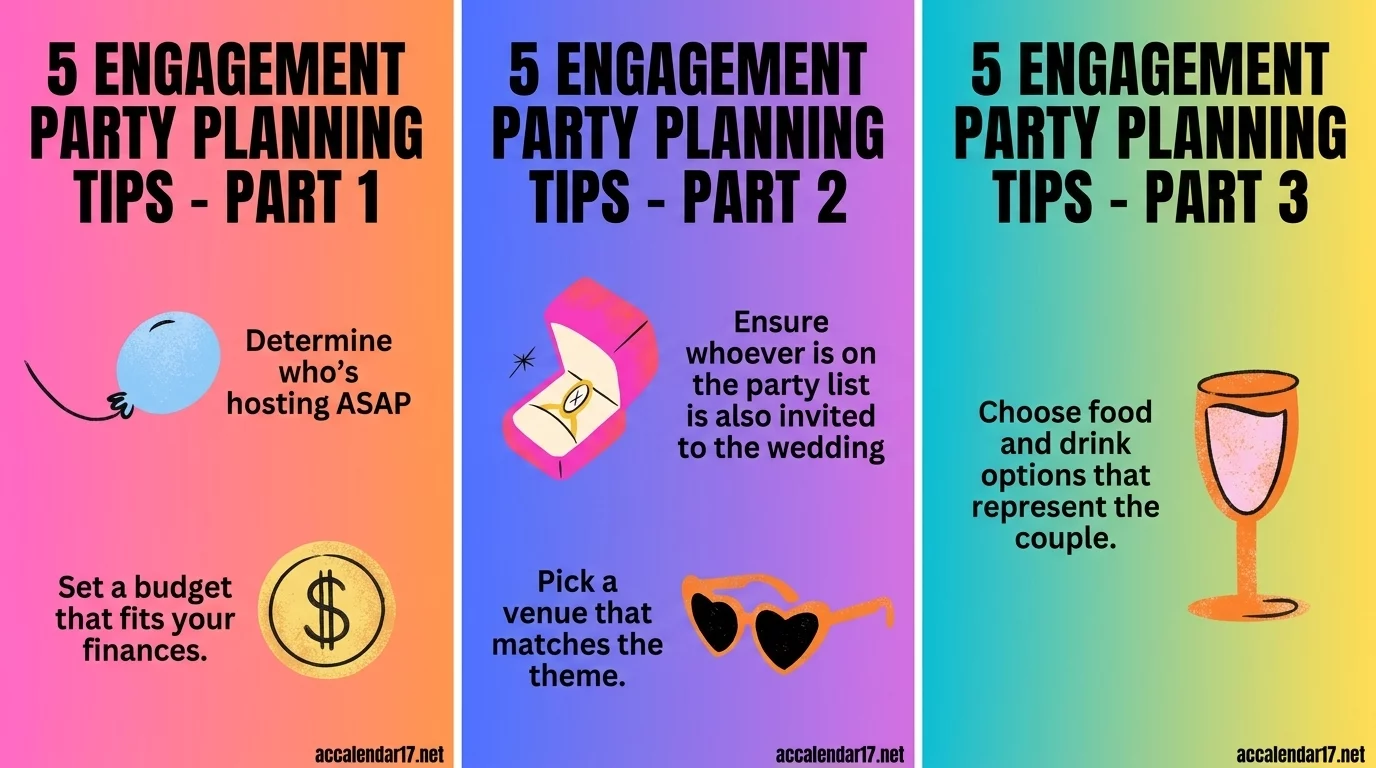
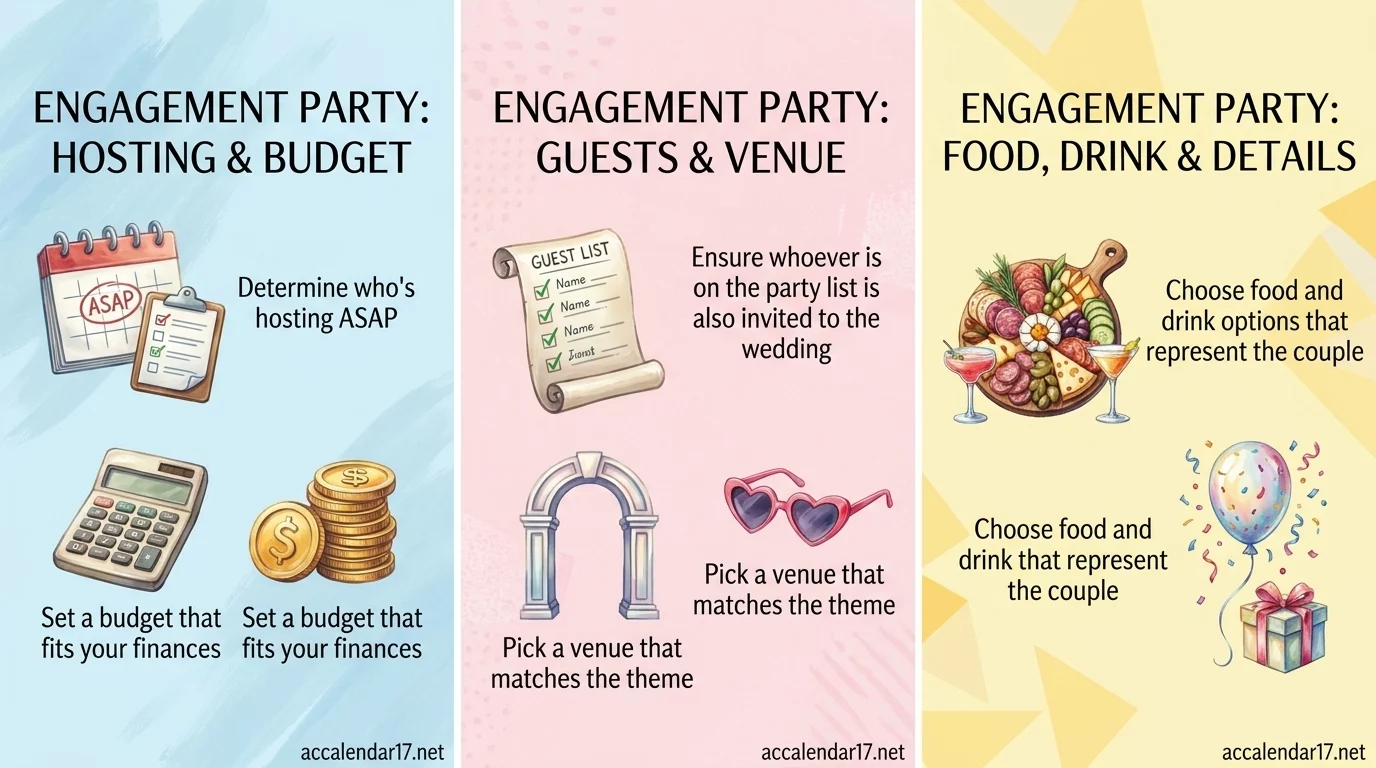
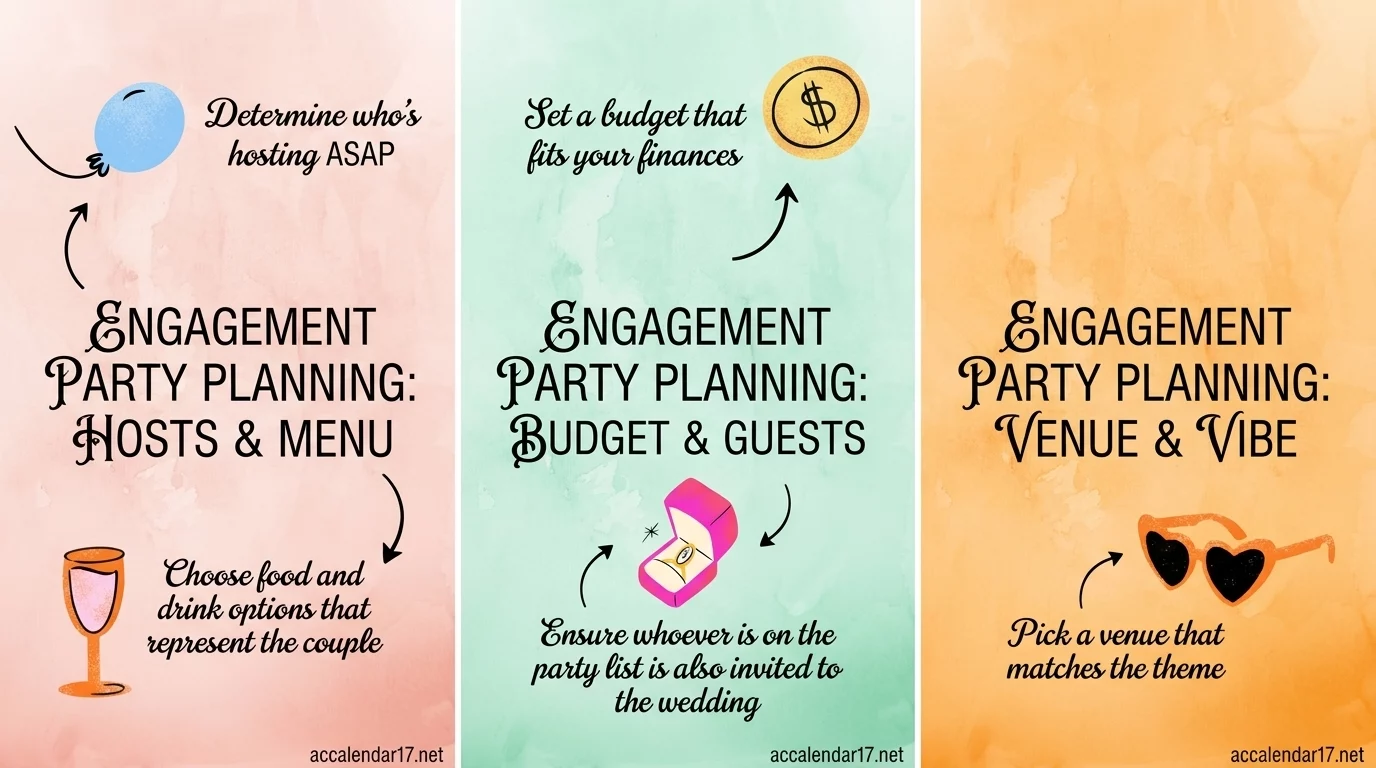
Plan the Engagement Party
An engagement party is often the first official wedding-related celebration.
Key planning tasks include:
- Selecting a venue
- Creating a guest list
- Sending invitations
- Choosing a theme
This event offers an opportunity for families and friends to celebrate together before wedding planning intensifies.
9–12 Months Before the Wedding
With major vendors secured, focus shifts to wedding details and guest planning.
Create Your Guest List
Determine:
- Maximum guest count
- Family allocations
- Plus-one policies
A finalized guest estimate affects nearly every aspect of the wedding budget.
Select Wedding Attire
Begin shopping for:
- Wedding dress
- Suit or tuxedo
- Bridesmaid dresses
- Groomsmen attire
Custom alterations may require several months.
Launch Your Wedding Website
A wedding website can include:
- Event details
- Travel information
- Accommodation recommendations
- Registry links
- RSVP forms
This central hub simplifies guest communication.
Book Accommodation Blocks
Reserve hotel blocks early, especially if:
- The wedding occurs during peak season
- Guests are traveling internationally
- The venue is located in a tourist destination
6–9 Months Before the Wedding
This stage focuses on refining plans and confirming logistics.
Send Save-the-Date Cards
Guests appreciate receiving advance notice.
This is especially important for:
- Destination weddings
- Holiday weekend weddings
- International travelers
Schedule Engagement Photos
Professional engagement photos can be used for:
- Wedding websites
- Invitations
- Guest books
- Social media announcements
Finalize Design Elements
Confirm:
- Wedding colors
- Floral concepts
- Stationery design
- Ceremony décor
A cohesive visual style creates a memorable guest experience.
Research Honeymoon Destinations
Popular honeymoon options include:
- Tropical resorts
- European city tours
- Adventure travel
- Luxury cruises
Booking early often results in better pricing and availability.
3–6 Months Before the Wedding
The wedding day is becoming increasingly real, making organization more important than ever.
Send Formal Invitations
Traditionally, invitations should be sent:
- 8 to 12 weeks before the wedding
Include:
- RSVP deadline
- Event schedule
- Accommodation details
Confirm Vendor Contracts
Review agreements for:
- Payment schedules
- Arrival times
- Service inclusions
- Cancellation policies
Maintaining organized records helps avoid misunderstandings.
Plan Pre-Wedding Events
Schedule:
- Bridal shower
- Bachelor party
- Bachelorette party
- Rehearsal dinner
Coordinating these events early prevents scheduling conflicts.
Book the Honeymoon
Finalize:
- Flights
- Hotels
- Transportation
- Travel insurance
- Excursions
Ensure passports and travel documents remain valid.
1–3 Months Before the Wedding
The final countdown has begun.
Attend Final Dress Fittings
Schedule alterations and fittings to ensure:
- Proper fit
- Comfortable movement
- Last-minute adjustments
Create the Wedding Day Timeline
Include:
- Hair and makeup appointments
- Photography sessions
- Ceremony start time
- Reception schedule
- Vendor arrival times
A detailed timeline keeps the entire day running smoothly.
Finalize Guest Numbers
Provide final counts to:
- Venue
- Caterer
- Rental companies
Most vendors require this information several weeks before the event.
Confirm Honeymoon Arrangements
Double-check:
- Reservations
- Flights
- Transfers
- Activities
Verification helps prevent travel disruptions.
Final Month Before the Wedding
This period should focus on confirmation rather than major decision-making.
Conduct Final Vendor Meetings
Review:
- Event schedules
- Setup requirements
- Emergency contacts
Everyone should understand their responsibilities.
Prepare Emergency Kits
Include:
- Pain relievers
- Sewing kit
- Stain remover
- Safety pins
- Backup cosmetics
These small items can solve unexpected problems quickly.
Obtain Marriage License
Requirements vary by location, so verify:
- Application deadlines
- Waiting periods
- Documentation requirements
Missing this step can create significant complications.
Wedding Week
The goal is to stay calm and enjoy the experience.
Prioritize Self-Care
Focus on:
- Adequate sleep
- Hydration
- Balanced meals
- Stress management
Feeling your best enhances the entire celebration.
Delegate Responsibilities
Allow trusted family members, friends, or coordinators to handle:
- Vendor questions
- Guest concerns
- Logistics
This allows you to remain present and enjoy the moment.
Wedding Day
After months of planning, your wedding day finally arrives.
Remember to:
- Trust your preparation
- Enjoy every moment
- Focus on your partner
- Celebrate with loved ones
Perfection is less important than creating meaningful memories.
Honeymoon Planning and Departure
The honeymoon serves as the perfect transition into married life.
Before Departure
Verify:
- Travel documents
- Reservations
- Currency exchange
- Travel insurance coverage
During Your Honeymoon
Take time to:
- Relax
- Disconnect from wedding planning
- Celebrate your new marriage
- Create unforgettable memories
This period allows couples to recharge after the excitement of the wedding.
Expert Tips for Staying Organized
Successful couples often follow these strategies:
Use Digital Planning Tools
Track:
- Deadlines
- Budgets
- Vendor information
- Guest responses
Schedule Monthly Planning Reviews
Regular reviews help identify:
- Missed tasks
- Budget concerns
- Upcoming deadlines
Avoid Procrastination
Completing tasks early provides flexibility when unexpected situations arise.
Conclusion
A well-structured engagement party to honeymoon calendar transforms wedding planning into a manageable and enjoyable process. By following a clear timeline, couples can stay organized, reduce stress, and focus on celebrating their relationship rather than scrambling to meet deadlines.
From announcing your engagement and hosting an engagement party to walking down the aisle and departing for your honeymoon, every milestone becomes easier when planned strategically. The key to a successful wedding journey is preparation, organization, and remembering that the ultimate goal is not just a beautiful event—but a strong and lasting marriage.
Frequently Asked Questions
When should couples start planning their honeymoon?
Ideally, honeymoon research should begin 6 to 9 months before the wedding, with bookings completed 3 to 6 months in advance.
How long should an engagement last?
Most engagements last between 12 and 18 months, although timelines vary based on personal preferences and circumstances.
Is an engagement party necessary?
No, engagement parties are optional but provide a wonderful opportunity for families and friends to celebrate together.
What should be booked first after getting engaged?
The wedding date and venue should typically be secured first because they influence most other planning decisions.
How can couples reduce wedding planning stress?
Using a detailed timeline, setting realistic budgets, delegating responsibilities, and maintaining organized records significantly reduce stress throughout the planning process.
