Building a daily meditation habit sounds simple but often fails without structure. A habit tracker calendar turns vague intentions into concrete progress by making consistency visible and rewarding. This step-by-step guide shows you exactly how to create yours and stick with meditation for 30 days and beyond.
Why Meditation Needs a Habit Tracker Calendar
Meditation works best when practiced daily, even for just 2 minutes. Without tracking, it’s easy to “forget” or convince yourself one skipped day doesn’t matter. A visual calendar shows your streaks, gaps, and progress at a glance, triggering the same satisfaction you get from crossing off to-do lists.
The calendar creates accountability through visibility. When you see 10 consecutive green checkmarks, skipping day 11 feels like breaking a chain you built yourself. This simple visual cue beats willpower every time.
Common Meditation Habit Killers
Most people fail because they aim for 20-30 minute sessions from day one—too much, too soon. Overambitious goals lead to burnout or skipped days when life gets busy. Without a tracker, one missed day becomes “I’ll start fresh Monday,” and weeks pass.
Inconsistent timing kills momentum. Meditating at 10 PM one day, 3 PM the next creates decision fatigue. Your brain needs a predictable ritual to make meditation automatic.
Science Behind Habit Tracking Success
Visual progress triggers dopamine—the same reward chemical released by social media likes. Each checkmark reinforces the habit loop: cue (same time daily) → routine (meditate) → reward (check the box). After 21-66 days, meditation becomes unconscious behavior.
James Clear’s Atomic Habits proves small, trackable wins compound. One 2-minute meditation daily beats sporadic 30-minute sessions for building neural pathways.
Step 1: Choose Your Perfect Meditation Tracker Format
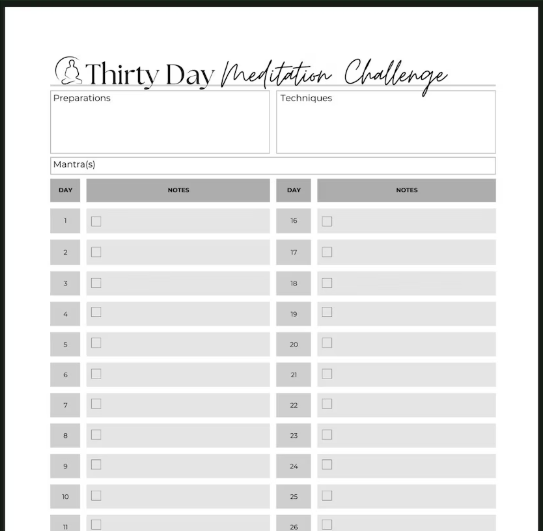
Pick a format you’ll actually use daily. Wall calendars work for visual people who pass the kitchen multiple times daily. Phone lock screen widgets suit digital natives. Bullet journal spreads appeal to creative types who enjoy decorating their tracker.
Start with a 30-day blank grid—simple boxes for each day. No fancy apps needed. The goal is frictionless tracking, not feature overload.
Physical vs Digital Tracker Comparison
| Format | Best For | Pros | Cons |
|---|---|---|---|
| Wall Calendar | Visual learners | Always visible, satisfying checkmarks | Less portable |
| Phone Widget | Digital natives | Always with you, reminders | Battery dependent |
| Bullet Journal | Creative types | Customizable, therapeutic | Takes setup time |
Your 30-Day Habit Tracker Template
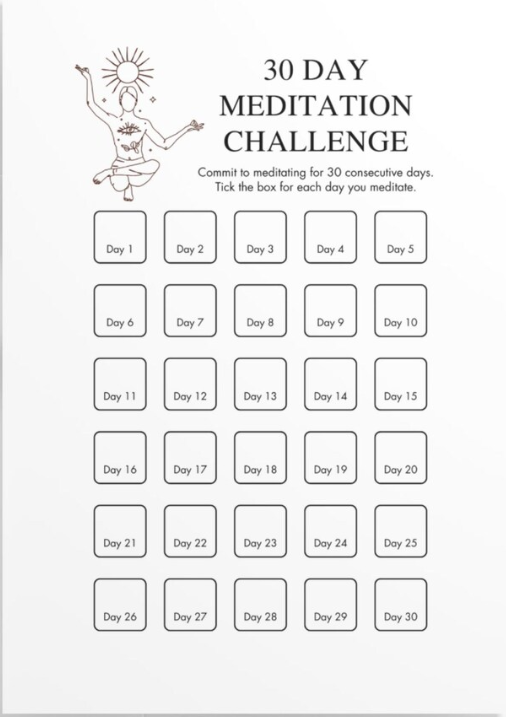
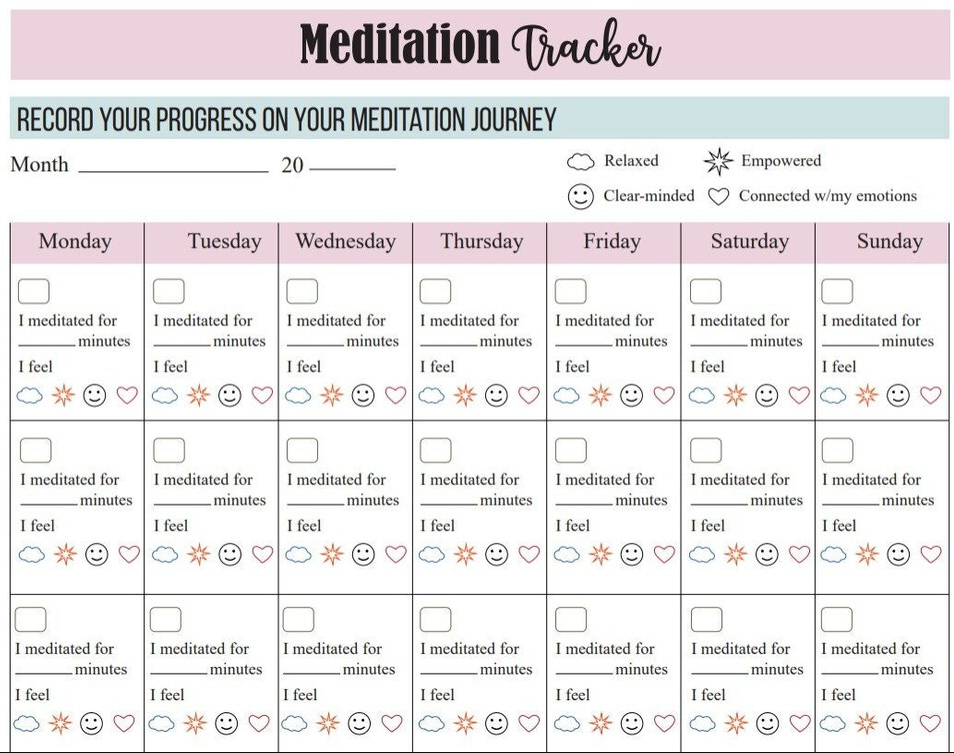
Draw this grid: 7 columns (days of week) × 5 rows (weeks) = 35 boxes. Label Day 1-30. Each box gets a color code: Green (meditated), Red (skipped), Yellow (under 2 minutes). Simple, scannable, motivating.
Step 2: Set Your Unskippable Minimum (2-Minute Rule)
Commit to 2 minutes daily, no exceptions. Set a timer, sit comfortably, breathe naturally, done. This bypasses resistance entirely. Most days you’ll naturally extend past 2 minutes once started.
Stack with existing habits: meditate right after brushing teeth, during coffee brewing, or before bed scrolling. Habit stacking reduces decision fatigue by 80%.
Finding Your Meditation Anchor Habit
- Post-teeth brushing (morning pe
