Homeschooling an elementary student with ADHD can be a deeply rewarding experience, but it also presents a unique set of challenges. Traditional public school schedules, which often demand long blocks of seated focus and rigid compliance, frequently lead to frustration, meltdowns, and burnout for neurodivergent children. If you are struggling to keep your child engaged and on track, the secret lies in working with their brain rather than against it. Implementing an adaptive homeschool curriculum calendar, paired with an interactive visual daily schedule template, is one of the most effective ways to foster independence, reduce daily anxiety, and create a joyful learning environment.
This comprehensive guide will explore why visual schedules are critical for children with ADHD, how to structure your curriculum calendar, and the exact steps to build a daily template that keeps your child motivated and focused throughout the day.
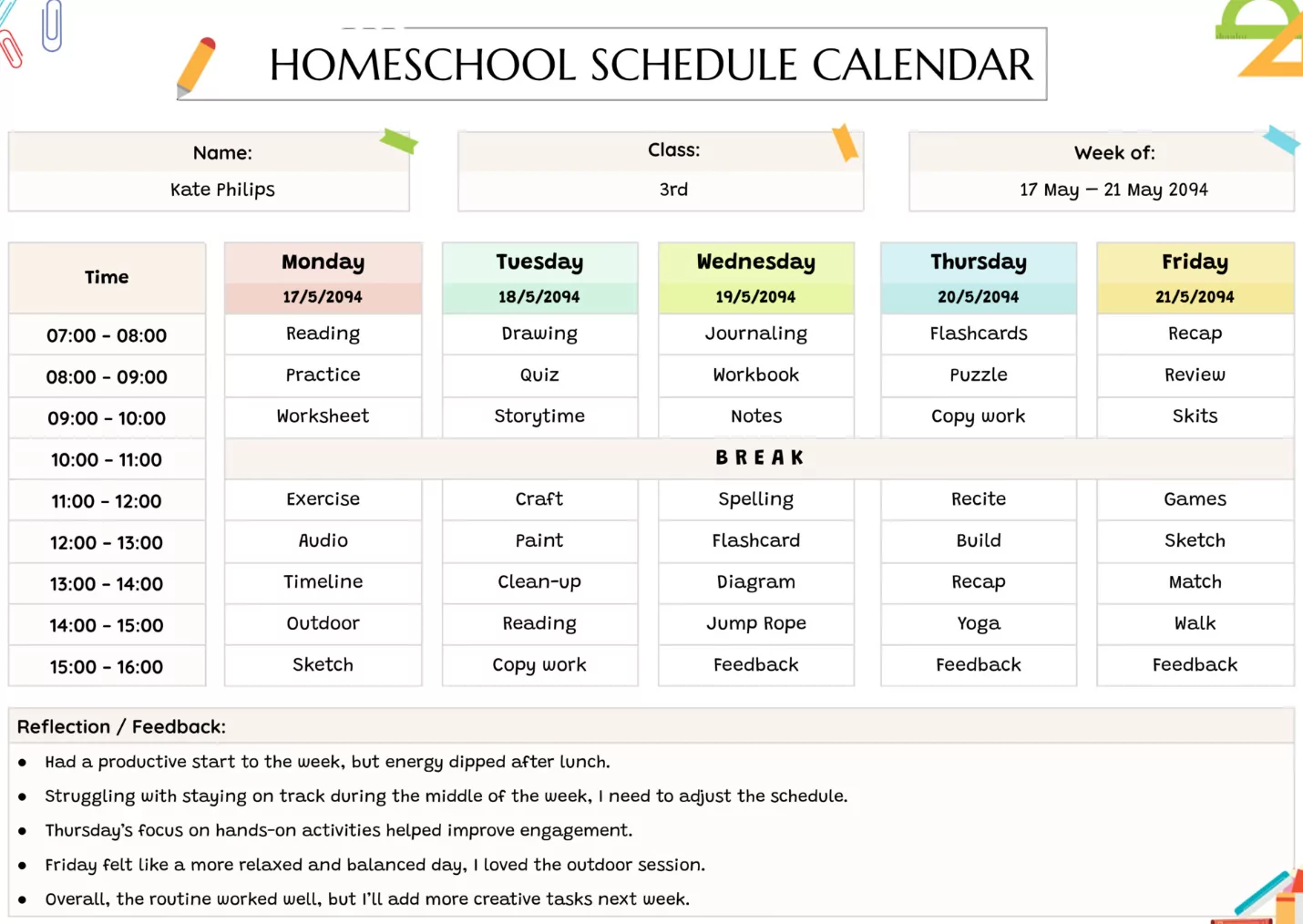
Why Elementary Students with ADHD Need a Visual Schedule
Children with ADHD often struggle with executive functioning skills, which encompass working memory, task initiation, and time management. They frequently experience a phenomenon known as “time blindness,” making it incredibly difficult for them to gauge how long an activity will take or to prepare mentally for a transition.
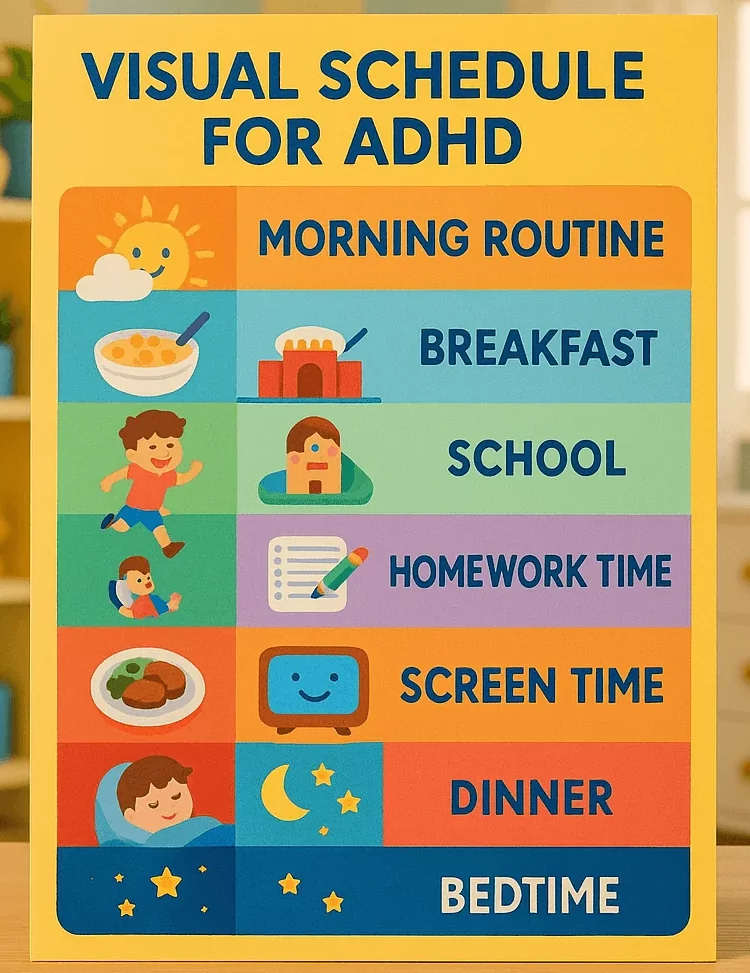
When a homeschool routine relies solely on verbal instructions, it places a massive cognitive load on an ADHD child. They are forced to constantly exert mental energy just to remember what they are supposed to be doing right now and what is coming next. A visual schedule removes this burden by acting as an external brain. By utilizing color-coded blocks, simple icons, or real photographs, you provide a tangible, always-accessible roadmap for their day.
This visual clarity instantly communicates your expectations, minimizes the need for constant parental nagging, and empowers the child to take ownership of their daily routine. Predictability equals safety for an easily overwhelmed nervous system, and visual cues provide that essential safety net.
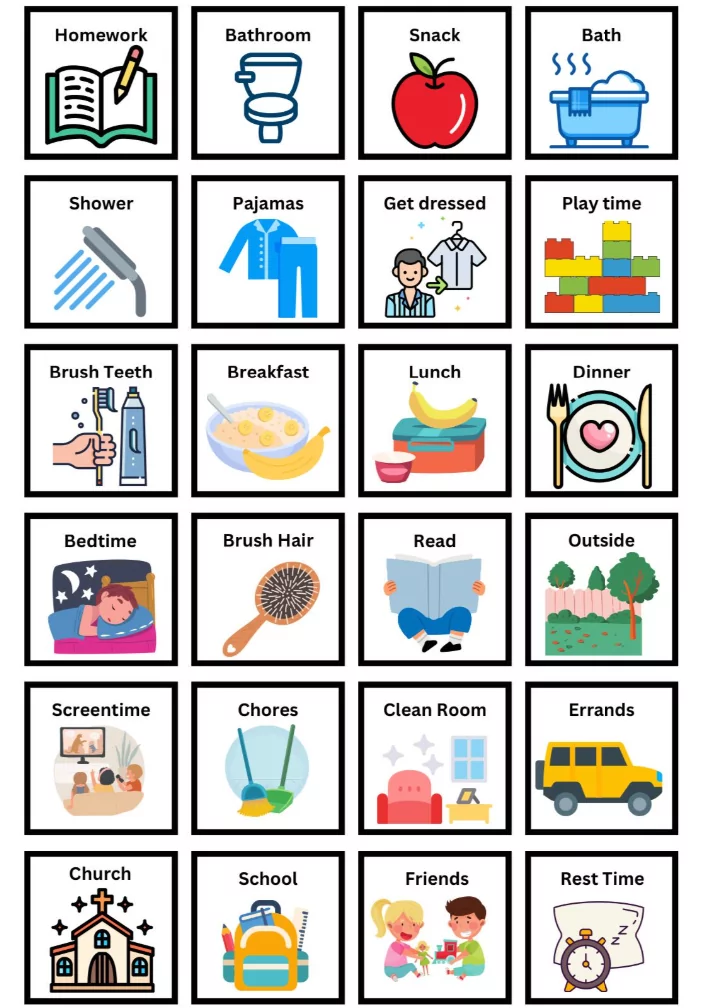
Key Elements of an ADHD-Friendly Homeschool Calendar
Designing a curriculum calendar for an elementary student with ADHD requires a significant departure from standard lesson planning. Your schedule must balance academic rigor with the neurological need for novelty, dopamine, and frequent shifts in attention.
Short, Punchy Focus Blocks
Attention spans for elementary kids with ADHD are typically quite short, and forcing prolonged concentration only leads to frustration. Instead of scheduling a 45-minute continuous math lesson, break core subjects into 15 to 20-minute high-focus blocks. Keep the lessons fast-paced and interactive. It is always better to end a lesson while they are still engaged, leaving them wanting a little more, rather than pushing them to the point of exhaustion.
Built-In Movement and Brain Breaks
For an ADHD brain, movement is not a distraction; it is a vital tool for maintaining focus. Your visual template must clearly depict scheduled brain breaks. Integrate physical activities like jumping jacks, hallway obstacle courses, or “heavy work” (such as carrying a stack of books or wiping down the kitchen table) between seated academic tasks. Movement powers up the brain, increases dopamine, and effectively resets their attention span.
Multisensory and Hands-On Learning
Relying solely on dry textbooks and repetitive worksheets is a recipe for a homeschool meltdown. Your curriculum calendar should heavily feature project-based and multisensory learning. Science experiments, baking to learn fractions, messy art projects, and outdoor nature walks provide the rich sensory input that a neurodivergent brain craves to stay stimulated.
Clear, Anchored Transitions
Transitioning from a preferred activity (like playing) to a non-preferred activity (like handwriting) is notoriously difficult for children with ADHD. Use visual timers, such as a physical sand timer or a color-fading clock, alongside your visual schedule to help them literally “see” time passing. Provide a five-minute warning before a subject ends, and physically point to the visual schedule so they know exactly what activity is coming next.
How to Build Your Visual Daily Schedule Template
Creating a daily schedule does not have to be complicated or require a degree in graphic design. The most effective templates are simple, interactive, and customizable to your family’s unique rhythm.
Step 1: Start with Anchor Points
Begin building your template by filling in the non-negotiable anchor points of your day. These are events that happen at roughly the same time every day, such as waking up, meal times, and bedtime. Once these anchors are firmly set, you can plug in the flexible academic and play blocks around them.
Step 2: Choose the Right Visuals
Select images that your child immediately understands without needing to read complex text. For younger elementary students, use clear clip art, simple recognizable icons, or even real photographs of your home environment (for example, a photo of their actual math workbook). Pair each image with a single, consistent keyword to help build sight-word recognition over time.
Step 3: Add Interactive Elements
An ADHD brain loves tactile feedback and a physical sense of accomplishment. Instead of just hanging a static piece of paper on the wall, make the schedule highly interactive. Use a laminated chart with velcro dots so your child can physically remove the “Reading” card and place it in a “Done” envelope. Alternatively, use a flip-chart style template where they can fold a paper flap over the completed task to reveal a hidden star or smiley face.
Step 4: Placement and Daily Review
Mount the visual schedule at your child’s eye level in a highly trafficked, central location, such as the kitchen or the main homeschool room. Every morning, spend five minutes reviewing the schedule together. Point out any changes—like a mid-day doctor’s appointment or an afternoon field trip—so there are no unwelcome surprises that could trigger emotional dysregulation.
Sample ADHD Homeschool Schedule for Elementary Kids
If you are wondering how to piece these elements together, here is a sample daily routine template designed specifically for an ADHD learner. Notice the frequent shifts between high-focus academic tasks and essential movement.
- 8:00 AM – 8:45 AM: Morning Routine. Visual checklist for getting dressed, brushing teeth, and eating a protein-rich breakfast.
- 8:45 AM – 9:00 AM: Schedule Review. Look over the visual board together. Let the child stick the day’s icons onto the chart to build anticipation.
- 9:00 AM – 9:20 AM: Core Math. 20 minutes of focused learning using hands-on manipulatives or colorful whiteboard markers.
- 9:20 AM – 9:25 AM: Brain Break. High-energy movement, like dancing to a favorite song or doing jumping jacks.
- 9:25 AM – 9:45 AM: Language Arts/Phonics. Interactive reading practice or spelling words in a sensory bin filled with rice or kinetic sand.
- 9:45 AM – 10:15 AM: Snack and Heavy Work. A nutritious snack followed by a physical chore, like taking out the recycling or wiping counters, to regulate the nervous system.
- 10:15 AM – 10:45 AM: Read Aloud. You read a chapter book aloud while the child keeps their hands busy with Legos, playdough, or a fidget toy.
- 11:00 AM – 12:30 PM: Lunch and Unstructured Play. A solid block of screen-free outdoor play to process the morning’s learning and burn off energy.
- 12:30 PM – 2:00 PM: Project-Based Learning. Time for subjects that require creativity rather than intense executive function, such as science experiments, history documentaries, or art.
- 2:00 PM – 2:30 PM: Wrap Up. Clean the workspace, check the final items off the visual schedule, and officially transition from “school mode” back to “home mode.”
Adapting the Curriculum Calendar: Loop Scheduling
Even with the most beautiful visual template, an ADHD homeschool day will sometimes go completely off the rails. It is vital to prioritize your relationship with your child over rigid curriculum pacing. If your child is having a highly dysregulated day, do not force them through the schedule just to check boxes.
To alleviate the stress of “falling behind,” many ADHD homeschool families abandon traditional Monday-to-Friday curriculum calendars in favor of a “Loop Schedule.” In loop scheduling, you simply list the subjects you want to cover in a specific order (e.g., Math, Science, History, Art). You dedicate a set amount of time each day to work down the list. If a meltdown causes you to stop after Math on Tuesday, you do not skip Science; you simply pick up with Science on Wednesday. This removes the intense pressure of arbitrary calendar dates and allows your child to learn at the exact pace their brain dictates.
Conclusion
A thoughtfully designed homeschool curriculum calendar and an interactive visual daily schedule are far more than just organizational tools; they are vital educational accommodations that allow an elementary student with ADHD to truly thrive. By utilizing short focus blocks, prioritizing daily movement, and creating a clear, visually structured environment, you can minimize chaos and maximize your child’s natural curiosity. Start with a simple, printable interactive template, involve your child in the planning process, and watch your homeschool days transform from stressful battles into successful, connected learning experiences.
