Manufacturing facilities operate in complex environments where production targets, workforce management, equipment maintenance, and operational efficiency must remain carefully synchronized. A well-designed production schedule calendar helps manufacturers coordinate these moving parts while minimizing downtime and maximizing productivity.
Whether managing a small production plant or a large industrial operation, a structured calendar system provides visibility into shift rotations, preventive maintenance schedules, production runs, staffing requirements, and operational milestones.
This guide explores how manufacturing facilities can use production schedule calendars to improve planning, optimize resource allocation, and maintain consistent output throughout the year.
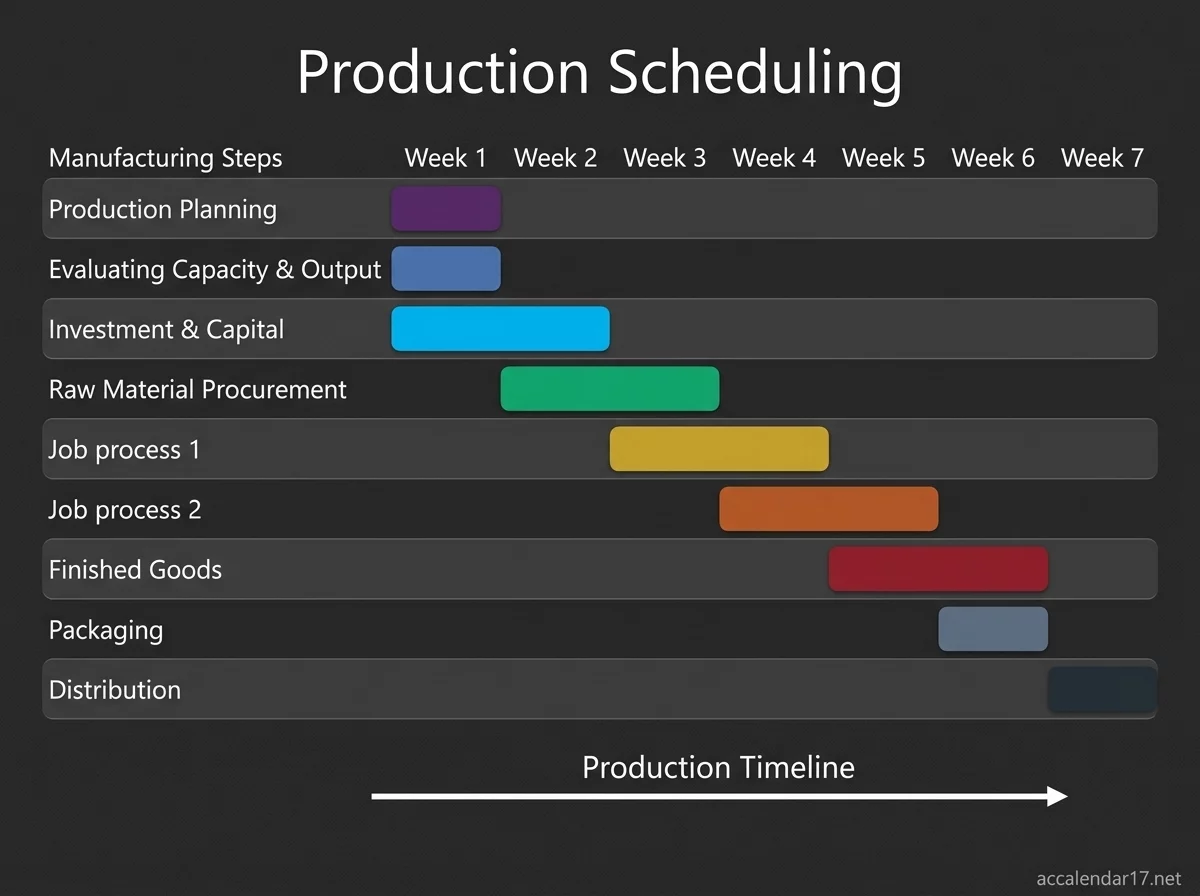
What Is a Production Schedule Calendar?
A production schedule calendar is a planning tool used to organize manufacturing activities over daily, weekly, monthly, and yearly timeframes. It serves as a centralized system for tracking production operations and coordinating resources.
A typical production calendar may include:
- Production schedules and deadlines
- Shift rotations and workforce assignments
- Equipment maintenance windows
- Quality inspections
- Inventory planning dates
- Facility shutdown periods
- Training sessions and compliance activities
By consolidating operational information into a single calendar, manufacturing teams gain a clearer understanding of production priorities and constraints.
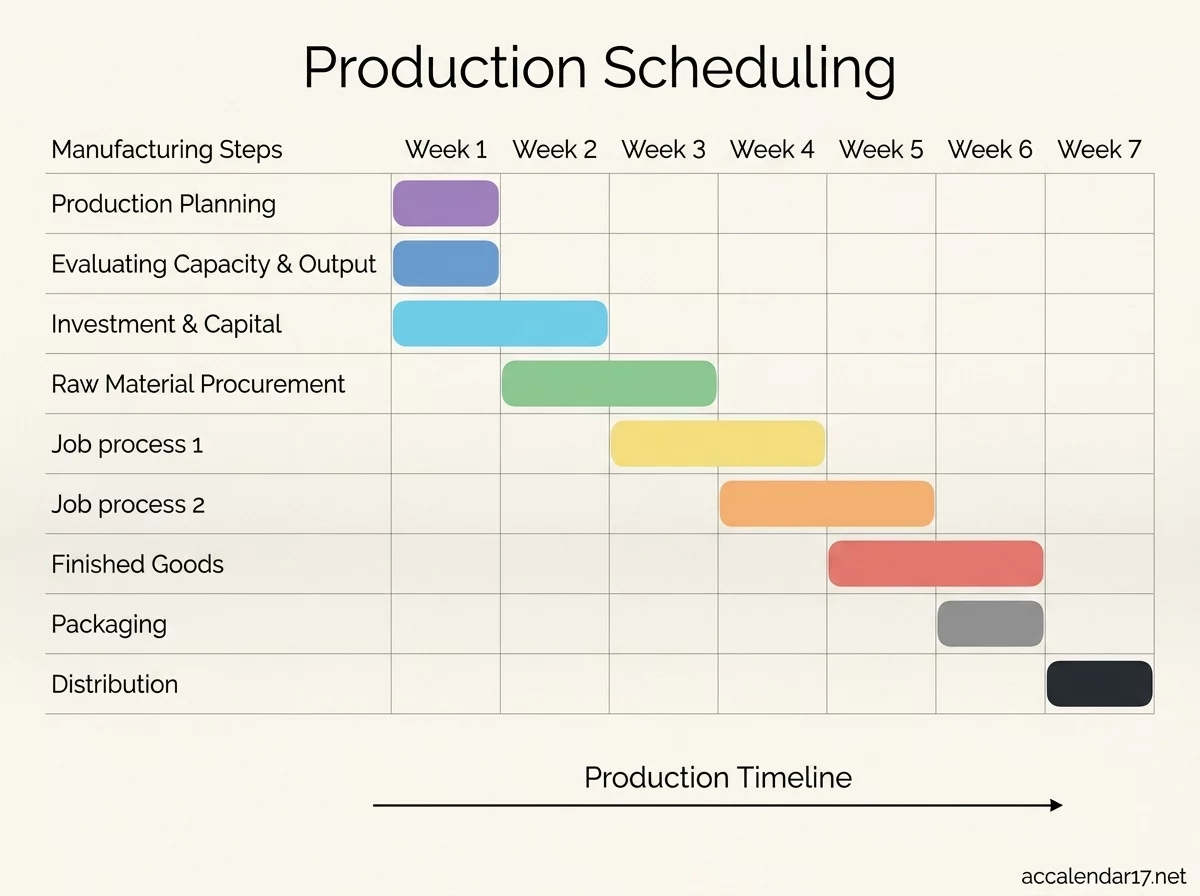
Why Manufacturing Facilities Need Structured Calendar Systems
Manufacturing operations involve multiple departments that must work together efficiently. Without a centralized scheduling system, communication gaps and resource conflicts can lead to delays, increased costs, and unexpected downtime.
Benefits of a production schedule calendar include:
- Improved production planning
- Better workforce coordination
- Reduced scheduling conflicts
- Enhanced equipment reliability
- Increased operational visibility
- More predictable production output
A structured calendar allows managers to anticipate issues before they impact operations.
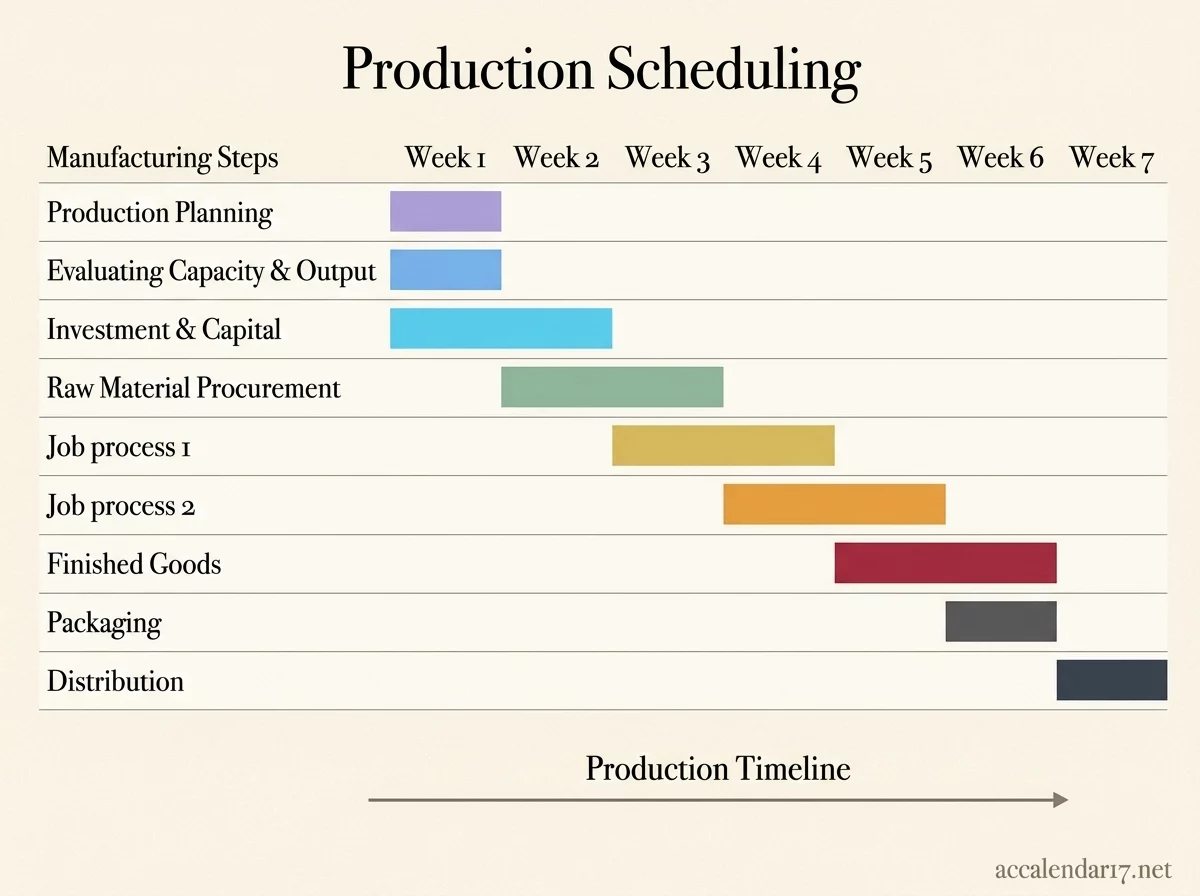
Tracking Shift Rotations Effectively
Managing Workforce Availability
Manufacturing facilities often operate around the clock using rotating shifts. Scheduling employee rotations accurately helps maintain adequate staffing levels while supporting employee well-being.
Calendar systems can track:
- Day shifts
- Evening shifts
- Night shifts
- Weekend schedules
- Overtime assignments
- Vacation and leave requests
Clear visibility helps supervisors avoid understaffing and excessive overtime.
Supporting Compliance Requirements
Many industries have regulations regarding employee working hours, rest periods, and overtime limits. Production calendars help managers monitor compliance and reduce scheduling risks.
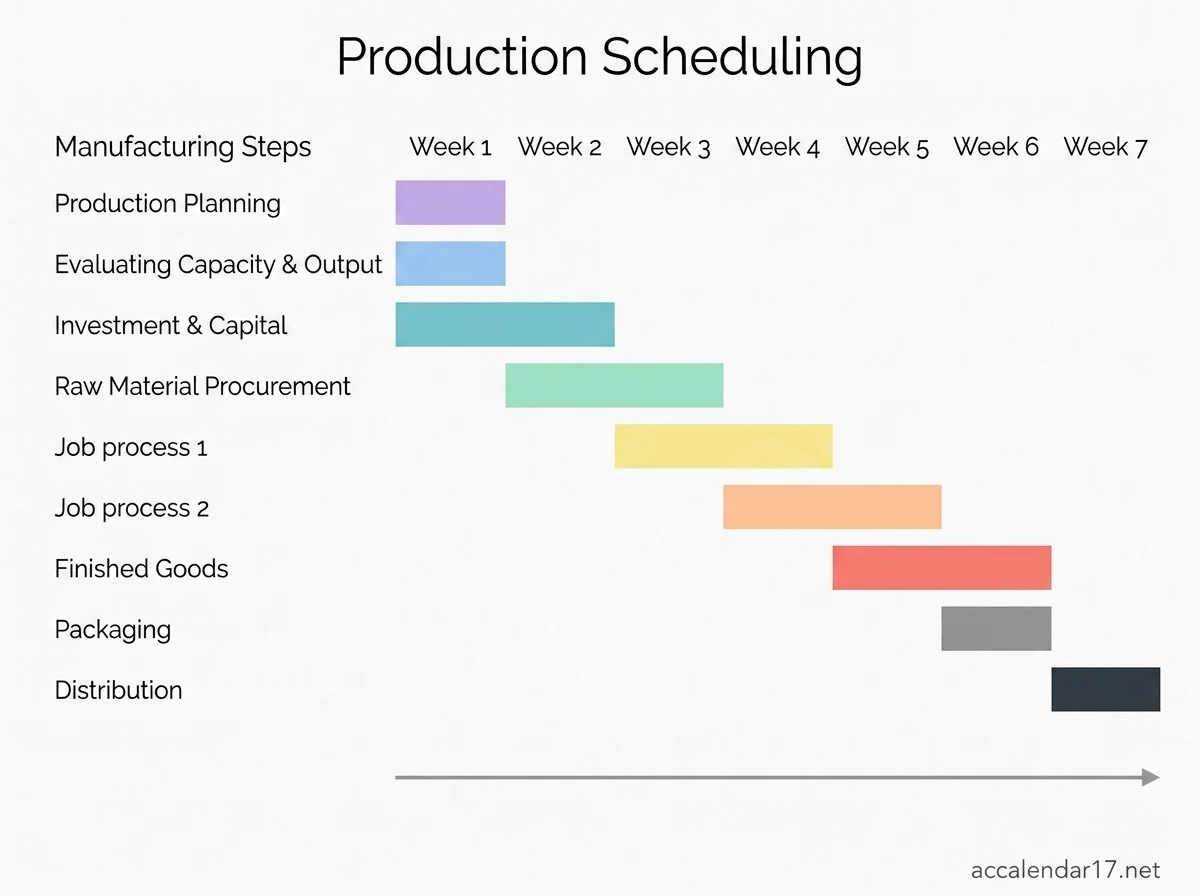
Integrating Preventive Maintenance Scheduling
Equipment reliability is critical to manufacturing productivity. Unexpected machine failures can disrupt production schedules and increase costs significantly.
A maintenance calendar helps coordinate:
- Routine inspections
- Preventive maintenance tasks
- Calibration schedules
- Equipment upgrades
- Safety inspections
- Major maintenance shutdowns
Scheduling maintenance proactively reduces the likelihood of costly unplanned downtime.
Balancing Production and Maintenance Priorities
One of the biggest challenges in manufacturing scheduling is balancing production demands with maintenance requirements.
Effective production calendars help facilities:
- Schedule maintenance during low-demand periods
- Coordinate maintenance with shift changes
- Minimize disruptions to production targets
- Allocate resources efficiently
Visibility into both production and maintenance schedules enables better decision-making.
Using Color Coding for Operational Clarity
Color-coded calendars improve readability and make it easier to identify operational priorities quickly.
Examples include:
- Blue for production runs
- Green for maintenance activities
- Yellow for training and compliance tasks
- Red for critical deadlines or shutdowns
- Purple for inventory audits
Visual organization reduces confusion and improves communication across departments.
Daily, Weekly, and Monthly Planning Levels
Daily Planning
Daily calendars focus on shift assignments, production targets, maintenance activities, and immediate operational needs.
Weekly Planning
Weekly schedules help coordinate staffing, production runs, inventory availability, and maintenance resources.
Monthly Planning
Monthly calendars provide broader visibility into production goals, facility projects, and strategic maintenance initiatives.
Combining all three planning levels creates a comprehensive scheduling framework.
Digital vs Printable Production Calendars
Digital Calendar Systems
Digital solutions offer real-time updates, notifications, reporting tools, and integration with manufacturing software.
Benefits include:
- Instant schedule updates
- Multi-user access
- Automated reminders
- Centralized reporting
Printable Production Calendars
Printable calendars remain useful for production floors, supervisor stations, maintenance departments, and visual management boards.
Advantages include:
- Quick reference access
- Improved floor visibility
- No device dependency
- Easy team communication
Many facilities use both digital and printable systems simultaneously.
Common Scheduling Mistakes to Avoid
- Overlapping maintenance and production activities
- Ignoring workforce fatigue and overtime limits
- Failing to update schedules promptly
- Insufficient communication between departments
- Not accounting for equipment downtime buffers
Proactive calendar management helps prevent these issues.
Who Benefits from Production Schedule Calendars?
- Plant managers
- Production supervisors
- Maintenance teams
- Operations managers
- Human resources departments
- Supply chain coordinators
Any manufacturing operation that relies on coordinated resources can benefit from a centralized scheduling system.
Future Trends in Manufacturing Scheduling
Modern manufacturing facilities increasingly integrate production calendars with automation systems, predictive maintenance technologies, and workforce management platforms. Advanced analytics and artificial intelligence are helping organizations forecast maintenance needs, optimize shift scheduling, and improve production efficiency.
As manufacturing becomes more data-driven, production schedule calendars will continue to serve as a critical planning and communication tool.
Conclusion
A production schedule calendar for manufacturing facilities is essential for tracking shift rotations, coordinating maintenance activities, and maintaining operational efficiency. By centralizing production planning and workforce scheduling, facilities can reduce downtime, improve communication, and achieve more predictable outcomes.
Whether implemented through digital software, printable planning boards, or a hybrid system, a well-maintained production calendar provides the visibility and structure needed to support modern manufacturing operations successfully.
FAQ Section
What is a production schedule calendar?
A production schedule calendar is a planning tool used to organize manufacturing activities, staffing, maintenance, and operational deadlines.
Why is shift rotation tracking important?
It helps maintain proper staffing levels, reduce scheduling conflicts, and support workforce compliance requirements.
How does a maintenance calendar improve productivity?
Preventive maintenance scheduling reduces unexpected equipment failures and minimizes downtime.
Should manufacturers use digital or printable calendars?
Many facilities use both. Digital calendars provide updates and reporting, while printables offer visibility on the production floor.
What departments benefit from production calendars?
Production, maintenance, operations, human resources, and supply chain teams all benefit from centralized scheduling.
